
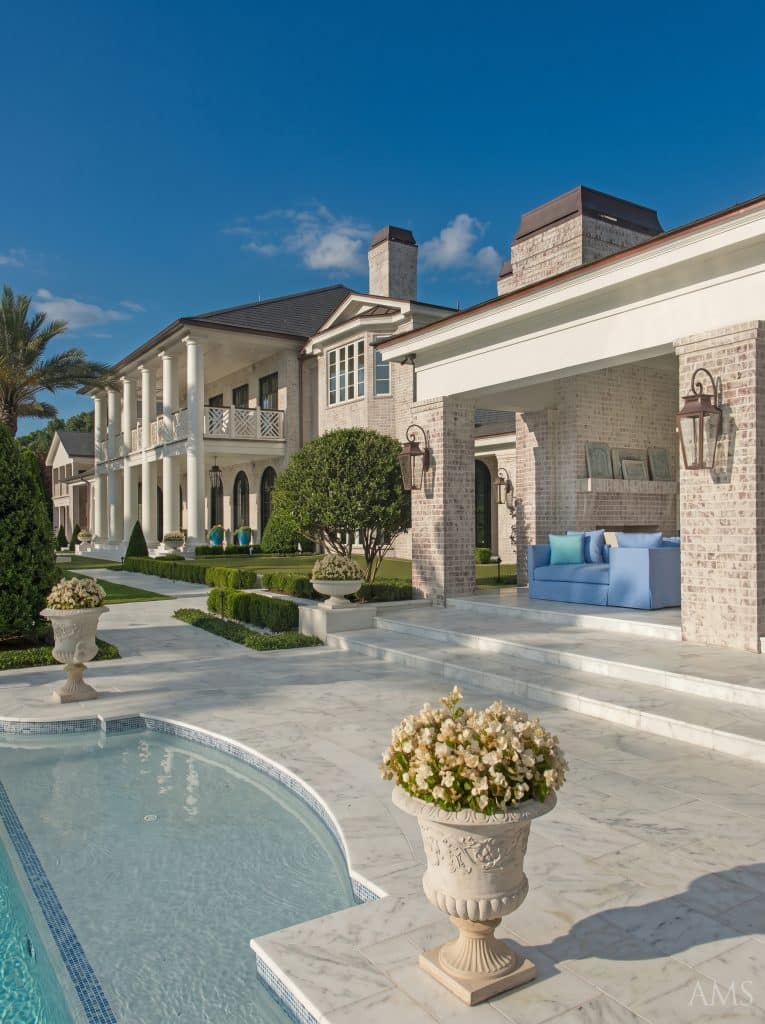
A pool deck in Orlando is one of the harshest environments any flooring material will ever face: brutal UV exposure ten months a year, afternoon downpours, salt-chlorine systems, sunscreen residue, and thousands of bare feet. Choosing the wrong paver means a deck that burns feet, gets slick when wet, or looks worn out in three summers. This guide covers what actually matters — and which stones our contractors reorder most for Central Florida pools.
What Actually Matters on a Florida Pool Deck
1. Surface temperature
On a July afternoon in Orlando, dark concrete and brick pavers can hit surface temperatures that make barefoot walking impossible. Light-colored natural stone — especially travertine and light limestone — stays dramatically cooler because it reflects more solar radiation and its porous structure dissipates heat instead of storing it. This is the single biggest reason natural stone dominates the Florida pool market.
2. Slip resistance
Around a pool, the finish matters as much as the stone. Tumbled, leathered, and chiseled finishes give natural grip even when wet. Highly polished finishes look beautiful indoors but have no business on a pool deck. Every paver we recommend for pool use comes in an outdoor-rated finish.
3. Salt-chlorine systems
Most new Orlando pools run salt systems, and salt is hard on soft materials. Dense stones like marble and quality travertine handle salt splash-out far better than concrete pavers, which pit and shed aggregate over time. Sealing at installation adds another layer of protection.
4. Durability and repairs
A dropped tool or a settling edge can crack any paver. With natural stone, you pull the damaged piece and drop in a new one — the repair disappears because stone ages gracefully. Concrete pavers fade unevenly, so a 3-year-old deck with new replacements looks patchy forever.
The Stones Our Contractors Reorder Most
Ivory Travertine — the Florida classic
Ivory Travertine Pavers are the best-selling pool deck stone in Central Florida, and it is not close. Light cream color, naturally cool underfoot, tumbled finish for grip, and a look that fits everything from Mediterranean to modern. If a client has no strong color preference, this is where we start.
Tundra Gray Marble — the modern favorite
Tundra Gray Marble Pavers deliver the clean gray look homeowners see in design magazines — but in real stone that stays cooler than gray concrete. White veining adds movement without busy patterning. Pairs perfectly with glass tile waterlines and modern coping.
Silver Travertine — warm and cool at once
Silver Travertine Pavers blend silver-gray with warm beige undertones, so they work with both warm and cool exterior palettes. They also hide water spots and pollen better than flat gray stones.
Tahoe Marble — leathered grip specialist
Tahoe Leathered Marble Pavers offer a cool gray-blue tone with a leathered surface that is genuinely confidence-inspiring under wet feet — a favorite for families with young kids and for pool surrounds that get constant splash.
Shell Beach Limestone — the coastal conversation piece
Shell Beach Limestone Pavers carry real fossil shells in a sandy matrix. For waterfront homes and anyone leaning into the Florida coastal look, nothing else in the yard gets more comments from guests.
Thickness and Installation: 1.25 in vs 2 in
For pool decks and patios over a compacted sand-and-gravel base, 1.25 in (30mm) pavers are the Florida standard — plenty strong for foot traffic and light furniture, and easier on the budget. Step up to 2 in for driveways or any area that sees vehicle loads. All of our paver collections are stocked in both, with matching 6×12 and 12×24 pool coping.
French Pattern or Straight Lay?
French Pattern (also called Versailles) remains the most popular layout for Orlando pool decks — the mixed-size pattern hides cuts, disguises slight size variation between pallets, and looks custom without custom pricing. Order 10–15% over your measured square footage to cover cuts and future repairs.
Sealing: Yes, But the Right Way
Seal natural stone pool decks with a penetrating (impregnating) sealer, not a topical film. Penetrating sealers block water and salt intrusion without changing the surface texture or making it slippery. Reseal every two to three years, or when water stops beading. Avoid cheap acrylic sealers — they turn hazy in Florida humidity within a season.
The Bottom Line
For Orlando pool decks, light-colored travertine and marble in a tumbled or leathered finish is the combination that wins on heat, grip, salt resistance, and long-term looks. Because we import our stone directly from our own quarries in Turkey and Egypt, contractors and homeowners buy these materials at true wholesale — often for less than premium concrete pavers at retail.
Get pricing for your pool project: request a wholesale quote or call +1 (689) 316-9090. Walk the pallets at our Orlando warehouse — 6343 All American Blvd — and feel the finishes yourself.